Plan from the current park map
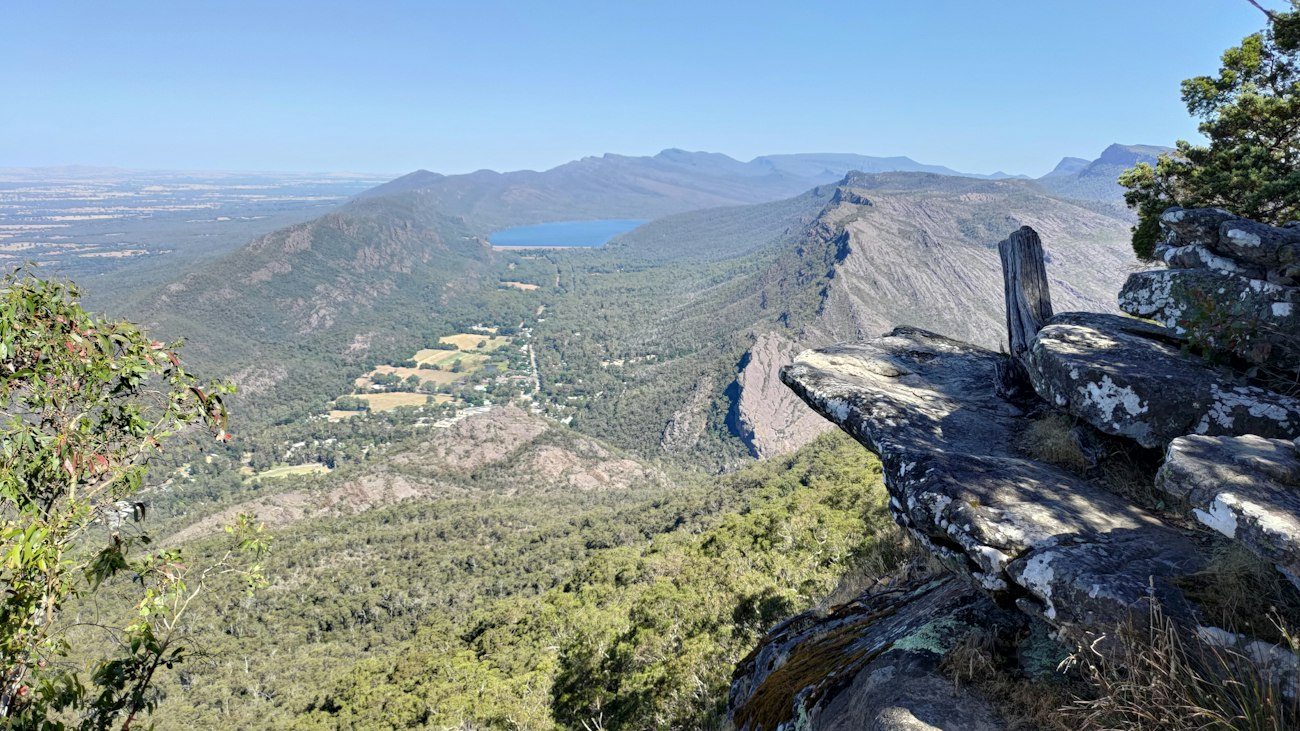
The Grampians, also known as Gariwerd, cover a large landscape with separate visitor areas and a network of roads and tracks. A first short stay works best when you focus on one area rather than attempting a complete circuit. Halls Gap is a practical starting point for many visitors, but the best base depends on the walks you actually intend to do.
Consult the current Parks Victoria page before choosing those walks. Fire recovery, roadworks and weather can affect individual sites for extended periods. Do not copy an old itinerary and assume every named waterfall or viewpoint is accessible. The official conditions page should shape the plan, not be a final formality after everything is booked.
Give arrival day a smaller task
After the drive, settle into your accommodation and make a short local outing if there is time. Visit a staffed information point when available, buy groceries and ask about your intended routes. This is more useful than racing towards a summit before dusk.
Check the route between your accommodation and the trailhead for the next morning. A property outside Halls Gap may offer space and quiet but add driving before and after every walk. If you prefer evenings on foot, choose a location near your meal options and confirm those venues' opening days.
Select a walk by its demands
Read distance, elevation, surface and exposure together. A famous viewpoint can involve steep or rocky sections, and different approaches to the same place may have different demands. The Pinnacle is not a casual flat stroll simply because it appears in many first-visit photographs.
For a mixed group, identify an alternative before leaving the accommodation. Some visitors may prefer a shorter lookout outing while others want a longer hike, but any split group needs an agreed meeting plan and suitable communication. It is often simpler to choose a route everyone can enjoy and keep the ambitious hike for another day.
Carry enough water and food, suitable footwear, a warm layer and rain protection. Save the official map offline and tell someone your plan if heading onto a more substantial route. Turn around early if the conditions or group's energy make the original objective unreasonable. Reaching the viewpoint is only half of an out-and-back walk.
Balance walking with the landscape's stories
Gariwerd is a cultural landscape as well as a place for outdoor recreation. Use official interpretation and current visitor information to understand the area rather than treating Aboriginal names and sites as decorative additions to a hiking itinerary. If a cultural programme or guided visit is available, check its timing and booking requirements.
Respect closures and access restrictions around cultural sites. Do not follow an unofficial track to reach a photograph you have seen online. A closed site is not an invitation to improvise another entrance, and a short stay does not justify trying to fit in a sensitive place without the appropriate arrangements.
Use the second day for contrast
After a demanding walking day, choose a shorter outing or a different type of viewpoint before departure. A quiet morning can be more enjoyable than another early climb followed by a long drive. If the first day was affected by weather, the second provides a chance to use a suitable alternative rather than forcing the original route.
Be realistic about how much energy remains for the road. Book the final night's accommodation so that the onward journey does not depend on finishing a hike at an exact time. Wildlife can be active near roads, and driving tired at the end of a walk adds unnecessary strain.
What a two-night plan can contain
A comfortable first visit might include an arrival afternoon in Halls Gap, one main walk on the full day and a short viewpoint visit before leaving. Add a meal or cultural visit where it fits naturally. That is enough to experience the scale and variety of the region without turning the stay into a series of deadlines.
Check conditions again before each outing, especially after rain or a hot, windy forecast. The flexibility to change one walk is more valuable than a long list of alternatives you have no time to reach. Keep the route compact and let the park's current conditions determine the details.