Begin with how you want to travel
K'gari is a large sand island and the traditional home of the Butchulla people. Its lakes, forests and beaches are not connected by an ordinary sealed-road sightseeing loop. Before comparing accommodation, decide whether you want to join a guided tour or take responsibility for a suitable vehicle, tides, access permissions and route planning.
For many first-time visitors, guided travel is the simpler way to experience several places without learning sand driving during the holiday. Self-drive can offer flexibility, but it is not just the same trip with a rental car replacing a coach. Be honest about experience and the amount of preparation you want to undertake.
What guided travel can simplify
A tour can organise the crossing, vehicle and daily route, leaving you to focus on the landscape and interpretation. Compare the itinerary's pace, group size, accommodation if overnight and what meals or entry arrangements are included. A day trip and a multi-day tour provide different amounts of time on the island.
Check where the tour collects passengers. Hervey Bay, Rainbow Beach and island-based departures are not interchangeable. If arriving from another town, allow a mainland night beforehand rather than relying on a long early drive to meet the group. Ask about luggage storage and what to bring if the tour continues overnight.
Look beyond the number of listed attractions. Time at a lake, the effort involved in walking from the vehicle and the length of travel between stops all affect the experience. A shorter list with room to enjoy each place may suit families or a mixed-ability group better than a rapid circuit.
Self-drive starts with the right vehicle
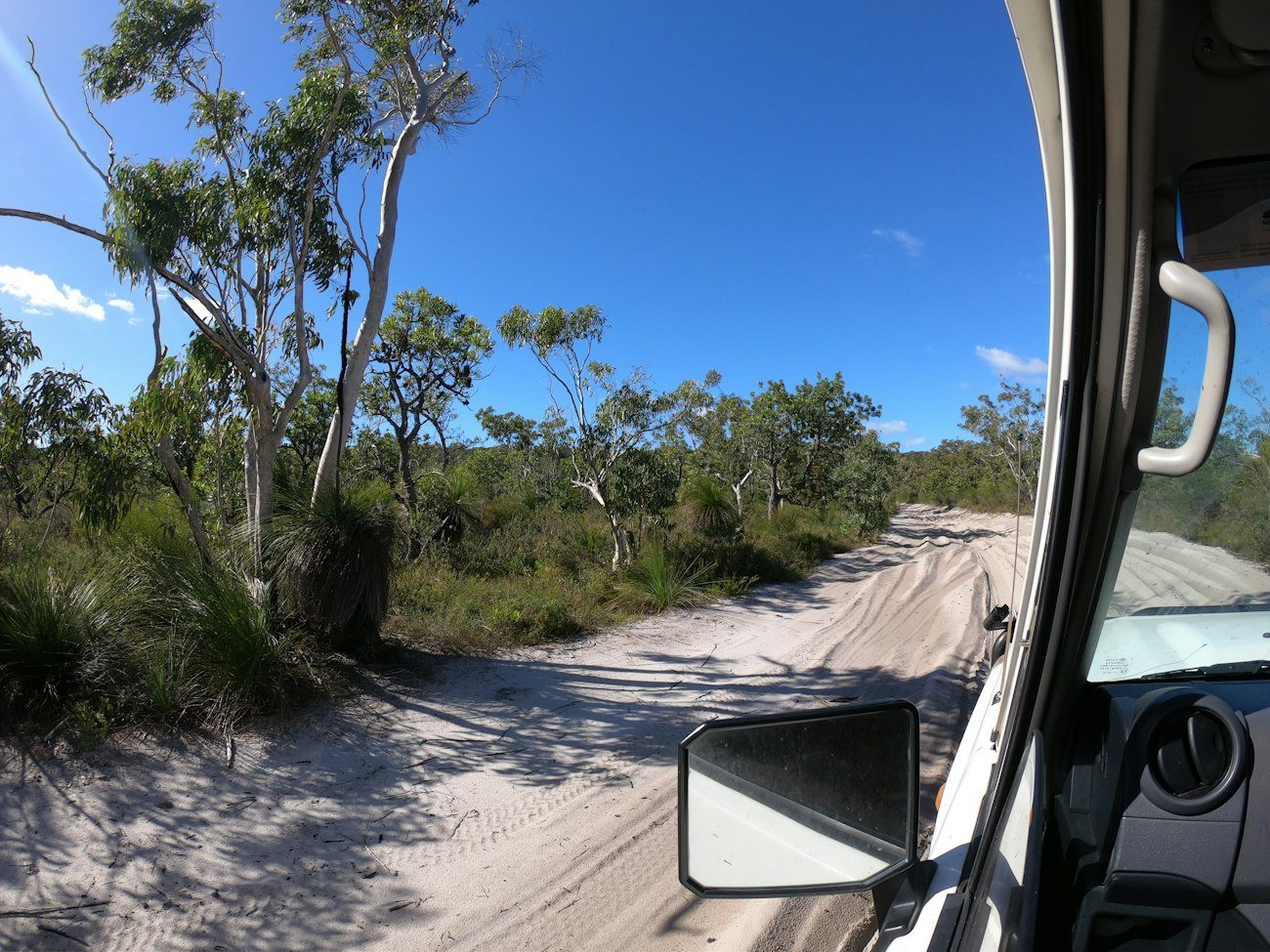
Queensland Parks advises that the island's sand tracks and beaches require suitable high-clearance four-wheel-drive vehicles. An ordinary car or a vehicle described only as all-wheel drive is not an equivalent choice. Confirm your vehicle's suitability and permission from the rental provider before making the crossing booking.
Use official preparation and driving guidance, including current conditions and tide information. Obtain the required vehicle access permission and any camping booking before travel. A ferry or barge ticket is a separate arrangement and should not be assumed to include everything else you need.
Plan a modest route for the available days. Navigation estimates alone cannot describe sand-driving conditions, queues or delays. Do not schedule a distant campsite or return crossing that requires you to keep moving when conditions are unsuitable. If the responsibilities feel unfamiliar, a guided trip is a practical alternative, not a lesser experience.
Overnight choices affect the whole route
Camping and roofed accommodation create different supply and packing needs. Confirm where you will sleep before choosing the day's sequence, and account for reaching it with time to settle in. A site that appears central on a map may not be central to the routes currently accessible to your vehicle.
For a family camping trip, consult the official guidance on fenced camping areas and dingo safety. Bring the supplies required for the chosen accommodation rather than assuming you can purchase everything after arrival. Keep essential medicines and personal items with you throughout the journey.
Respect the island's wildlife and water
Wongari, the island's dingoes, are wild animals. Read the official dingo guidance before arrival, keep children close, secure food and rubbish and never feed wildlife. Follow ranger and guide instructions even when an animal appears relaxed or accustomed to visitors.
Use designated visitor areas and current local advice for water activities. The ocean beach is also a vehicle route in places, so remain alert when walking near traffic. At lakes and sensitive natural sites, follow restrictions intended to protect the environment and keep food where the rules permit it.
Keep the return flexible enough
Do not connect the final island crossing tightly to a flight or long onward drive. Weather and access can affect the day, and packing up takes time even when everything runs smoothly. A mainland night after the visit can make the journey more comfortable.
The best choice is the one that fits both your interests and your capability. Guided travel provides structure and interpretation; self-drive asks more of the visitor. Choose consciously, prepare from current official information and leave enough time to experience the island without making every day a race to the next crossing or campsite.