Start with the season and the access report
Kakadu is a large national park, and the places you can reach depend on more than the number of days available. Read the current access report before choosing the route, then use the seasonal information to understand the wider pattern. A dry-season label is not a guarantee that every road or attraction will be open.
At the time of checking in October 2026, Parks Australia states that the Jim Jim and Twin Falls area is closed for 2026. Do not build a current visit around ground access to those sites. Follow the linked official notices for later changes rather than assuming an old itinerary or photograph describes present access.
Give a first trip at least two full park days where possible
Three nights can create two full days between the drives into and out of the area. This is a useful planning framework for a first visit, not a claim that the whole park fits into that time. With fewer nights, choose a smaller set of experiences rather than trying to compress the same circuit.
Compare accommodation locations with the activities you intend to book. A single base reduces packing, while moving once may reduce repeated driving on a longer route. Test both versions on the map before deciding; the best arrangement depends on the areas actually open and relevant to your interests.
Make the first day about orientation
Visit an operating visitor centre for current guidance and context. The staff can help explain which places are appropriate for your available time and conditions. Keep the arrival afternoon modest so that a slower drive does not immediately put the itinerary behind.
Use the park's cultural information to guide the visit. Kakadu is Country cared for by Bininj and Mungguy, and rock art and cultural places deserve time and respect. Follow the site instructions, stay on permitted paths and do not treat every image or story as something to reproduce without guidance.
Choose contrasting experiences
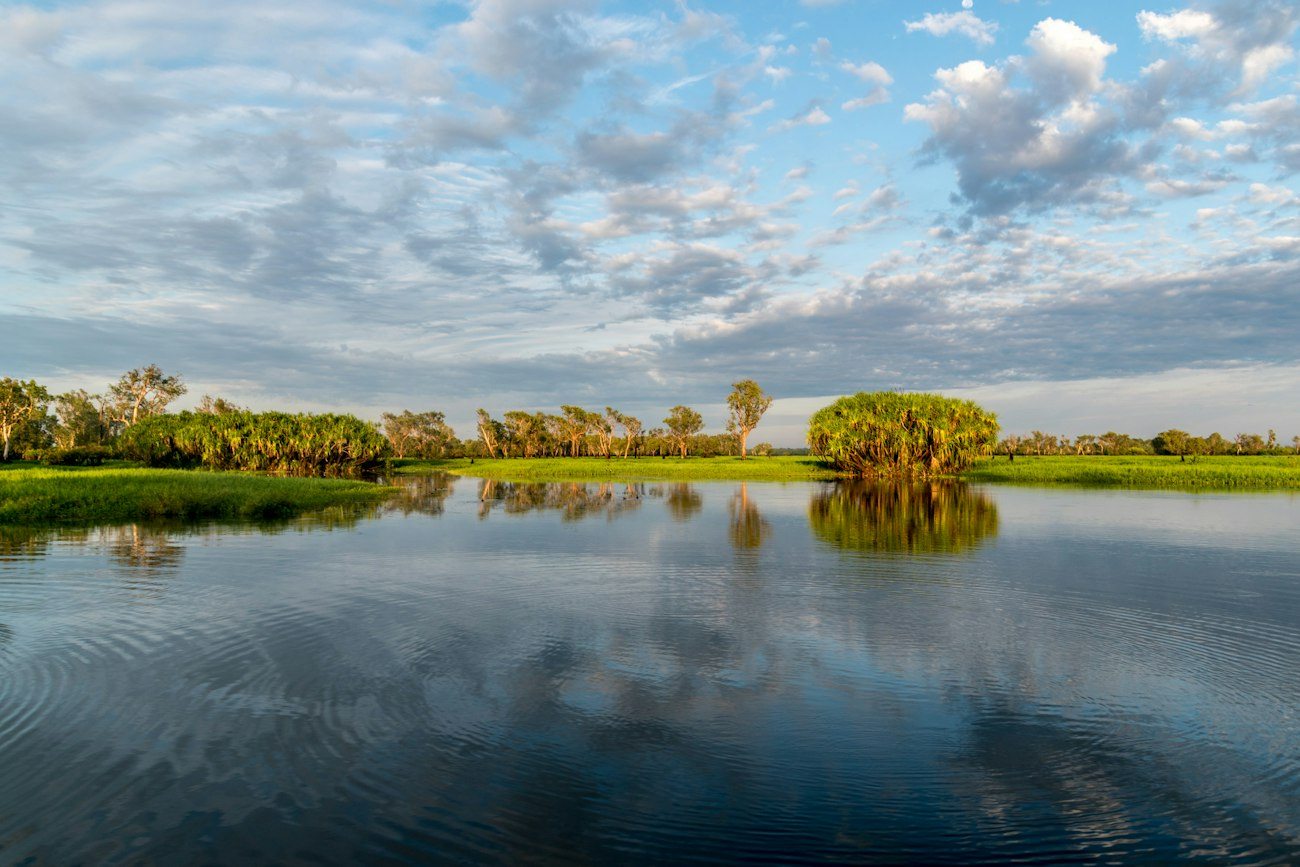
A rock-art visit and an organised wetland experience can provide different perspectives on the park. Investigate current options around Ubirr or Burrungkuy and the available boat departures, then select a manageable combination. Do not assume a scheduled tour removes the need to check the departure point and drive to it.
Book the experience that matters most at a time you can reach comfortably. Surround it with simpler activities in the same area. If you want a longer walk, give that walk a substantial part of the day and reduce other stops accordingly. A park day should contain time outside the vehicle, not only travel between named places.
Treat roads and water with care
Check vehicle suitability, road conditions and any rental restrictions for the chosen route. Do not enter a closed road or attempt a flooded crossing. If the intended connection is unavailable, recalculate the route and accommodation sequence rather than improvising a shortcut.
Follow Kakadu's current crocodile and water-safety guidance and all on-site signs. A calm or attractive body of water is not an indication that it is suitable for swimming. Select activities from the official visitor information and the instructions of the people operating them.
Keep the middle of the day manageable
Heat and humidity can affect the energy available for walking and exposed stops. Plan appropriate breaks, carry the supplies recommended by the park and choose routes that suit the group. The presence of a track on a map does not mean it is a sensible choice in every condition.
Confirm meals and fuel arrangements around your base rather than assuming city-style availability. Save maps, addresses and tour details before leaving reliable connectivity. These small preparations help the park days stay focused on the experiences you came for.
Leave with a route that still fits
If continuing to Katherine or returning to Darwin, put that journey into the final day's plan before adding another attraction. A final short stop may work; a major detour can turn departure into the busiest day of the visit.
With more time, deepen the visit through another open area or a guided cultural experience rather than automatically increasing daily distance. Kakadu becomes easier to appreciate when the itinerary follows the season and your interests instead of a fixed collection of images.